Stellar Electric Propulsion (StEP) is a revolutionary spacecraft technology that produces thrust using only solar power—no fuel, no propellant, no limits.
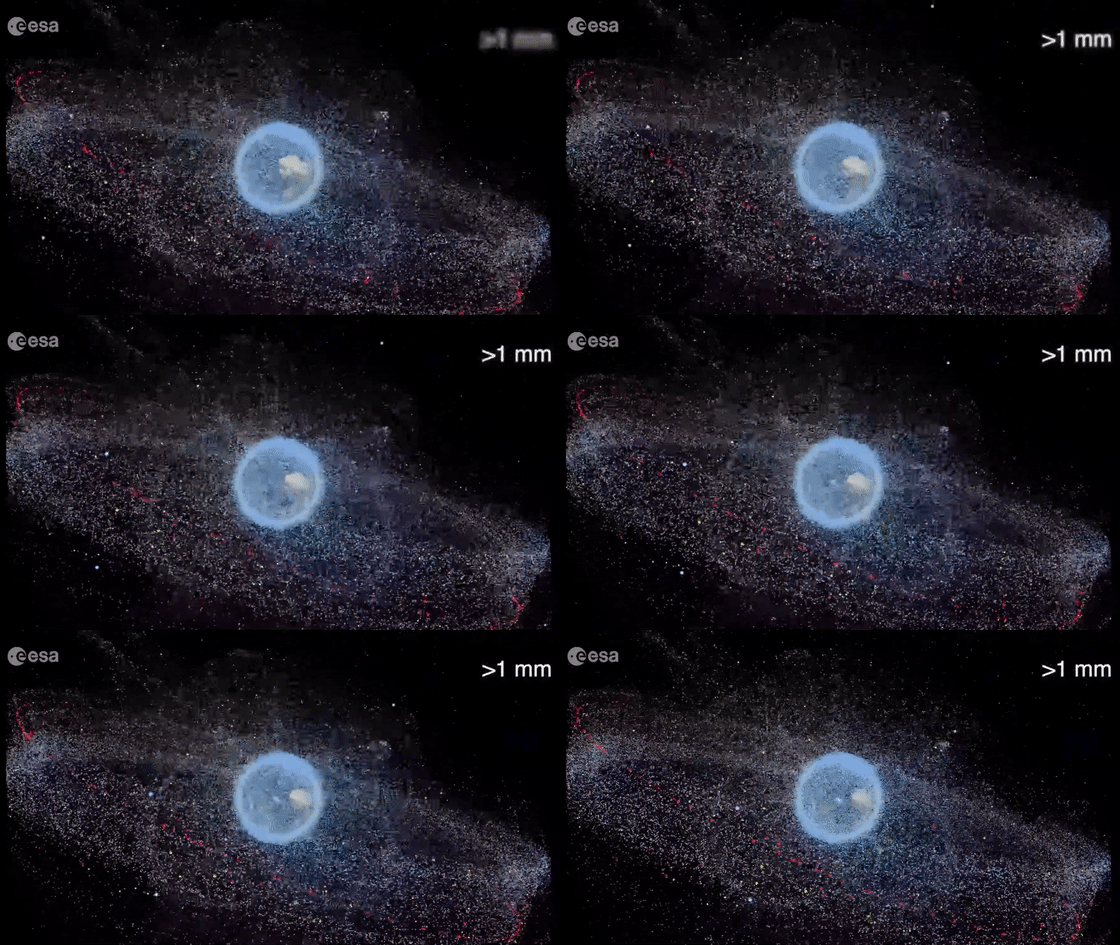
Over 36,000 pieces of debris larger than 10cm orbit Earth at 17,500 mph—threatening the satellites our modern world depends on.
At VSL we are developing technologies to Reduce, Reuse, and Recycle orbital debris.
Image: Visualization of debris ("space junk") currently orbiting Earth. All objects shown here are larger than 1 Millimeter in diameter.
Source: European Space Agency (ESA)
StEP technology eliminates the fundamental limitation of all traditional spacecraft propulsion: running out of fuel.
Runs on photovoltaic arrays. Wherever there's sunlight, there's propulsion.
No fuel tanks, no propellant consumption. Purely electronic thrust generation.
One spacecraft, unlimited missions. Reduce, reuse, and recycle orbital debris.
No fuel system weight means faster acceleration, shorter routes, lower launch costs.
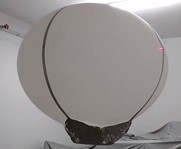
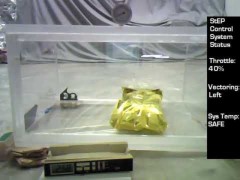
Our prototypes have passed rigorous proof-of-concept testing, including neutral buoyancy flight and vacuum chamber operation.
Sealed inside a helium balloon gondola and flown in mid-air conditions.
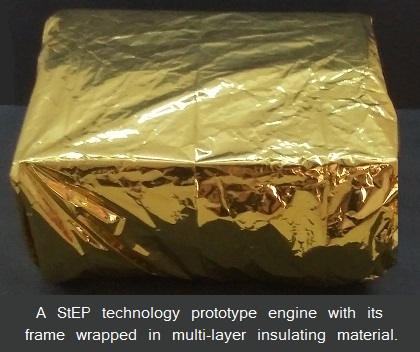
Smaller, lighter, and more tightly engineered. Tested under space-like conditions.
VSL Space Drones equipped with solar-powered StEP thrusters will mitigate dangerous orbital debris—with each vehicle capable of performing multiple missions to Reduce, Reuse, and Recycle space junk.
Learn about our technology roadmapPrimary mission: deploy autonomous drones to clear dangerous orbital debris.
Intercept and deflect potentially dangerous Earth-crossing objects.
Survey, mine, and return valuable materials from near-Earth asteroids.
Whether you're an investor, government partner, or aerospace professional, we'd love to discuss how StEP technology can transform space operations.